


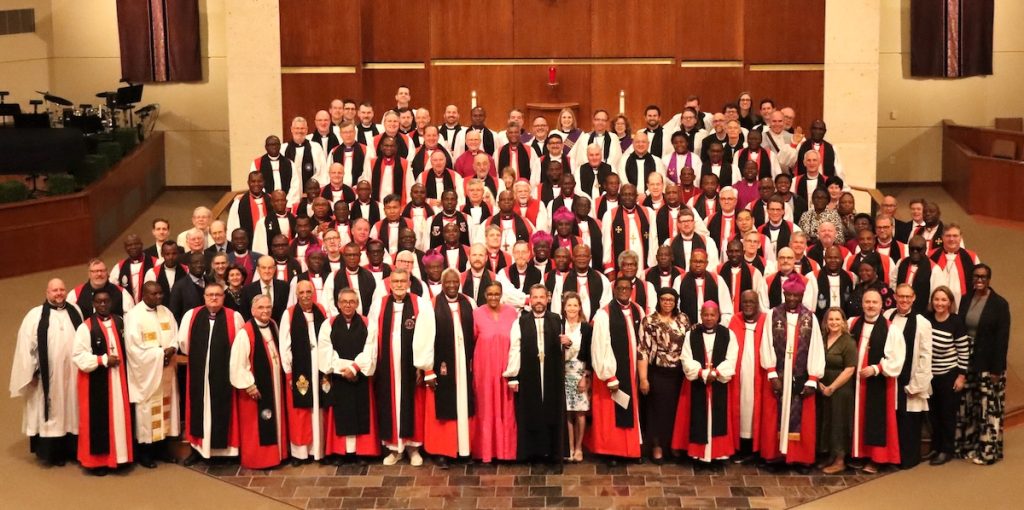
The Anglican Church, one of the world’s largest Christian communities with over 85 million members, is at an important crossroads. Once united under the symbolic leadership of the Archbishop of Canterbury, the church now faces significant debates over theology, culture, and leadership. These debates are shaping the future of Anglicanism worldwide and have particular relevance for Nigerian and Global South believers.
Recent developments have brought attention to the Global Fellowship of Confessing Anglicans (GAFCON), a network of conservative churches largely from Africa, Asia, and Latin America. GAFCON recently met in Abuja, Nigeria, where they decided to restructure their leadership. Instead of electing a single leader to rival the Archbishop of Canterbury, they chose a committee-style leadership that includes primates, bishops, clergy, and laypeople. Archbishop Laurent Mbanda of Rwanda was elected chairman. The move signals a shift towards shared authority and democratic decision-making within conservative Anglican circles.
The reason behind this shift is not personal power struggles but a desire to remain faithful to Scripture. Many conservative Anglicans feel that some Western churches, particularly in the United Kingdom, the United States, and Canada, have departed from biblical teaching on marriage and sexuality, especially regarding same-sex unions and the ordination of LGBTQ clergy. The recent appointment of Sarah Mullally as the first female Archbishop of Canterbury also intensified concerns among conservatives, who see these decisions as prioritising contemporary culture over the authority of Scripture.
It is important to understand that GAFCON and other Global South churches are not forming a separate church. They describe their movement as a reordering of the Anglican Communion, maintaining unity around core doctrines while allowing provinces to make their own decisions on secondary matters such as women’s ordination. Leaders emphasise that the disagreements are about whether Scripture or culture guides the church, not personal hostility or division.
For many Christians, this global tension may seem worrying, but it is also an opportunity to understand the diverse expressions of Anglican faith worldwide. Churches in the Global South, including Nigeria, are experiencing growth, vibrant community life, and deep commitment to biblical teaching, while churches in the West face declining membership and cultural pressures. The leadership shift at GAFCON reflects a practical response to these realities, aiming to preserve biblical truth while remaining inclusive of clergy and laity in decision-making.
So what should you look out for? First, be aware that the Anglican Communion is diverse, not fractured. There are differences of opinion, but many conservative and liberal provinces continue dialogue and cooperation. Second, focus on the core message of the Gospel rather than the controversies of governance or secondary practices. Finally, pray for unity in truth, wisdom for leaders, and clarity for members who may be confused by headlines about leadership changes or theological disagreements.
The Anglican Church today is at a crossroads, balancing tradition, Scripture, and modern pressures. Understanding these developments helps Christians everywhere, especially in Nigeria and the Global South, to engage with their faith thoughtfully, support biblical teaching, and remain united in Christ even amid disagreements about practice and leadership.
